

Facebook Reactions: The Future’s Sympathy Card
October 8, 2015 - David Hall
Category: Social Media Marketing
We’ve all been there. An acquaintance’s grandmother passes away. A friend posts an article reporting on a deadly mudslide in the news. Your college roommate breaks up with his girlfriend of three months—weren’t they soulmates yesterday? We don’t have the time, or the desire, to write a thoughtful comment, but we’d like a way to express our compassion. Enter Facebook Reactions.
It’s been nearly a month since Facebook founder and CEO, Mark Zuckerberg, confirmed that the social giant is developing an empathy button. Today, Facebook put “Reactions” to the test.
What is Facebook “Reactions?”
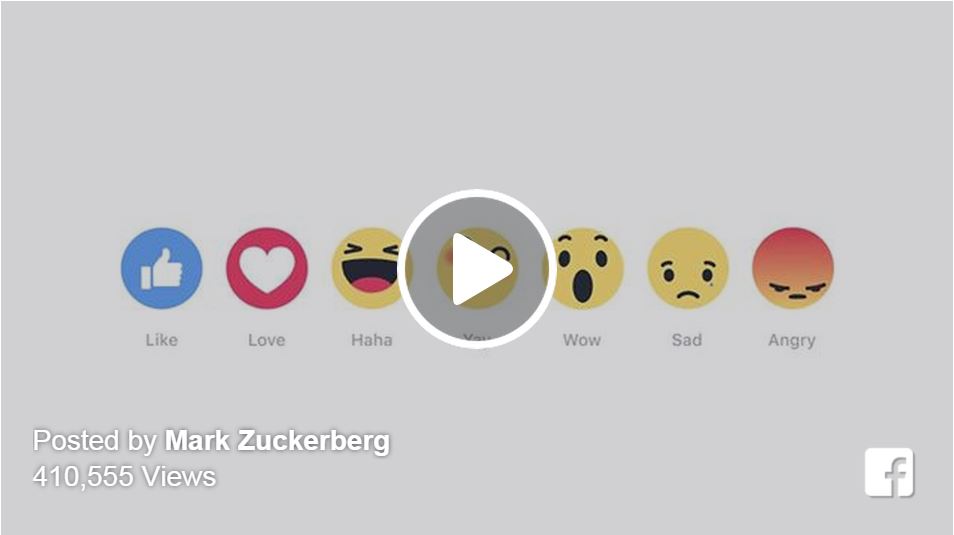
In a post on (where else?) Facebook, the Zucks described “Reactions” as a “more expressive Like button.” By long pressing the Like button, users can express like, love, humor (haha), appreciation (yay), awe (wow), sadness, and anger.
According to Tech Crunch, Facebook has long held a patent on an emoji reaction button. Users in Ireland and Spain started testing “Reactions” today, and the social giant hopes to roll this out to all users soon.
Why not a “Dislike” button?
“People aren’t looking for an ability to downvote other people’s posts,” says Zuckerberg. “What they really want is to be able to express empathy.”
A recent Peer J Computer Science journal study found that while negative content spreads faster than positive content, positive content was shared more and ultimately reached a larger audience. This mirrored a 2014 study performed by Facebook that concluded happiness is the most contagious online emotion.
While these findings seemly demonstrate that online social interactions are mostly positive, news of online bullying and teens seeking counseling for social media abuse make it clear that not every interaction is warm and fuzzy. The concept of a straight up “Dislike” button made both marketers and parents cringe.
How does this impact my marketing efforts?
Zuckerberg stressed in his post that “Reactions” is “not a dislike button, but it does give you the power to easily express sorrow and empathy — in addition to delight and warmth.”
Currently, the number of likes and interactions on a particular post determines its appearance—or lack thereof—in your newsfeed. This is why marketers rely on these insights as a way to develop future content—i.e., we examine the types of content your audience is engaging with and post more of it.
My educated guess is that moving forward, Facebook will take into account all “Reactions,” not just “Likes.” Even when content isn’t Likeable—think a post about a favorite employee who’s retiring from your practice or an article about halitosis—a future algorithm will boost the post’s placement in the newsfeed because it’s deemed significant as a result of all interactions on that particular post.